
How to Clean Block Paving: Step-by-Step UK Guide
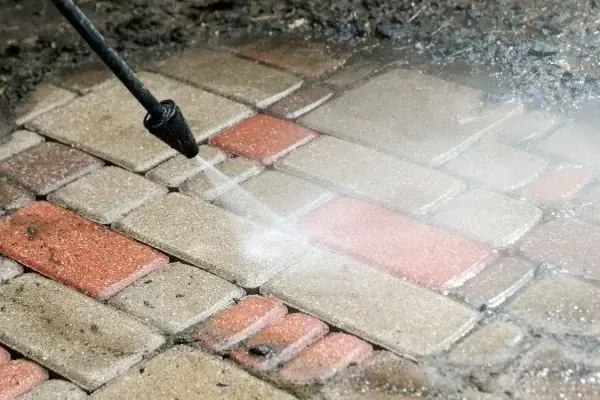
Quick answer: How to Clean Block Paving
To clean block paving: sweep and weed the surface, pre-treat moss and algae, clean with a rotary surface cleaner at moderate pressure, rinse the slurry away, let it dry, brush kiln-dried sand into the joints, then optionally apply a block paving sealer. Hold a standard jet lance at an angle and never point it straight down the joints.
Key takeaways on how to clean block paving
- A rotary surface cleaner gives an even finish without stripe marks.
- Always re-sand joints with kiln-dried sand - it keeps blocks locked and stops weeds.
- Wait for a dry spell of 2 to 3 days before sanding and sealing.
- Sealing every 3 to 5 years keeps paving cleaner for longer.
What you need
- Stiff yard brush and weeding tool.
- Pressure washer (ideally with a rotary patio cleaner attachment).
- Moss and algae killer suitable for paving.
- Kiln-dried jointing sand (not building sand).
- Optional: a breathable block paving sealer.
Step-by-step: cleaning block paving
- Clear the area. Move cars, pots and bins. Bulky garden rubbish can be cleared in one trip by a junk removal and clean-out team.
- Weed and sweep. Remove weeds from the joints and sweep loose debris.
- Pre-treat. Apply moss and algae killer and leave it to work for the time on the label.
- Clean. Work in overlapping passes with a rotary cleaner. Keep a jet lance at 30 to 45 degrees and at least 30 cm away.
- Rinse. Wash the dirty slurry towards a drain, not onto lawns or walls.
- Dry and re-sand. Once bone dry, brush kiln-dried sand diagonally across the joints until full.
- Seal (optional). Apply sealer in thin coats on a dry, mild day.
Mistakes that ruin block paving
- Using building sand, which holds water and grows weeds.
- Blasting the joints empty and leaving them that way.
- Sealing damp paving, which traps moisture and turns white and milky.
- Using acid cleaners on coloured blocks, which can bleach them.
When to call a professional
Large driveways, heavy oil staining or sunken areas are worth handing over. Professional rotary cleaners and hot water systems remove far more ingrained dirt than domestic machines. If you also have a timber deck that has gone green and slippery, Deck Building Services has useful advice on whether boards can be saved.
How to Clean Block Paving: frequently asked questions
Can I use a pressure washer on block paving?
Yes. Use a rotary surface cleaner or hold the lance at an angle, and always re-sand the joints afterwards.
What is the best sand for block paving joints?
Kiln-dried sand. It is fine and completely dry, so it flows to the bottom of the joints and locks the blocks together.
How often should block paving be cleaned?
Most UK driveways need a deep clean every 1 to 2 years, with sweeping and weed control in between.
Should I seal block paving?
Sealing is optional but it stabilises the joint sand, resists oil stains and makes cleaning easier.