
Pressure Washer Tips: How to Jet Wash Safely Without Damage
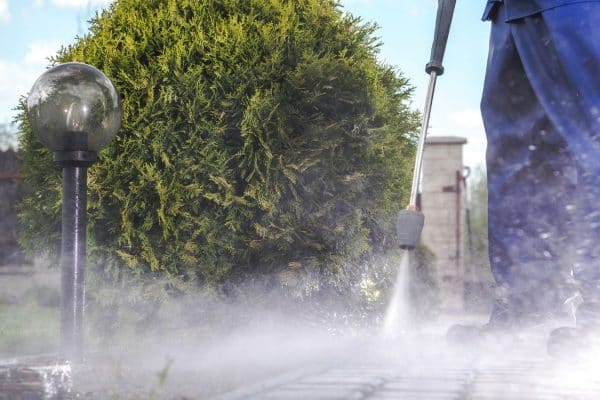
Quick answer: Pressure Washer Tips
Start with the widest nozzle and the lance at least 30 cm away, test on a hidden spot, keep the spray moving at an angle, and never jet wash render, roofs, sandstone, wooden fences at close range or anything electrical. Use an outdoor socket protected by an RCD and keep cables out of the water.
Key takeaways on pressure washer tips
- Wide fan nozzle first; only go narrower if needed.
- Never jet wash roofs, render or soft stone.
- Use an RCD-protected outdoor socket.
- Wear eye protection and closed shoes.
Surfaces you should not pressure wash
- Roof tiles - risk of damage and water ingress.
- Render and painted walls.
- Sandstone and limestone at high pressure.
- Windows, door seals and vents.
- Cars at close range - it can strip paint.
Electrical safety outdoors
Water and electricity are a dangerous mix. Plug pressure washers only into outdoor sockets protected by an RCD, keep extension reels fully unwound and off wet ground, and never spray near outdoor lights or sockets. If your outdoor socket trips or looks damaged, have it checked by a qualified electrician before use.
Technique tips
- Test on a hidden area first.
- Work from the top down and from the house outwards.
- Keep the lance moving in overlapping strokes.
- Rinse dirty water away from walls and doors.
Pressure Washer Tips: frequently asked questions
What PSI do I need for a patio?
Most domestic patios clean well at 1,500 to 2,500 PSI with a rotary cleaner. Natural stone needs lower pressure.
Can I pressure wash my house walls?
Brick in good condition can take low pressure, but render, painted walls and old soft brick should be soft washed instead.
Is it legal to jet wash during a hosepipe ban?
Hosepipe bans usually cover pressure washers for domestic use. Check your water company's rules; professional cleaning businesses often have exemptions.